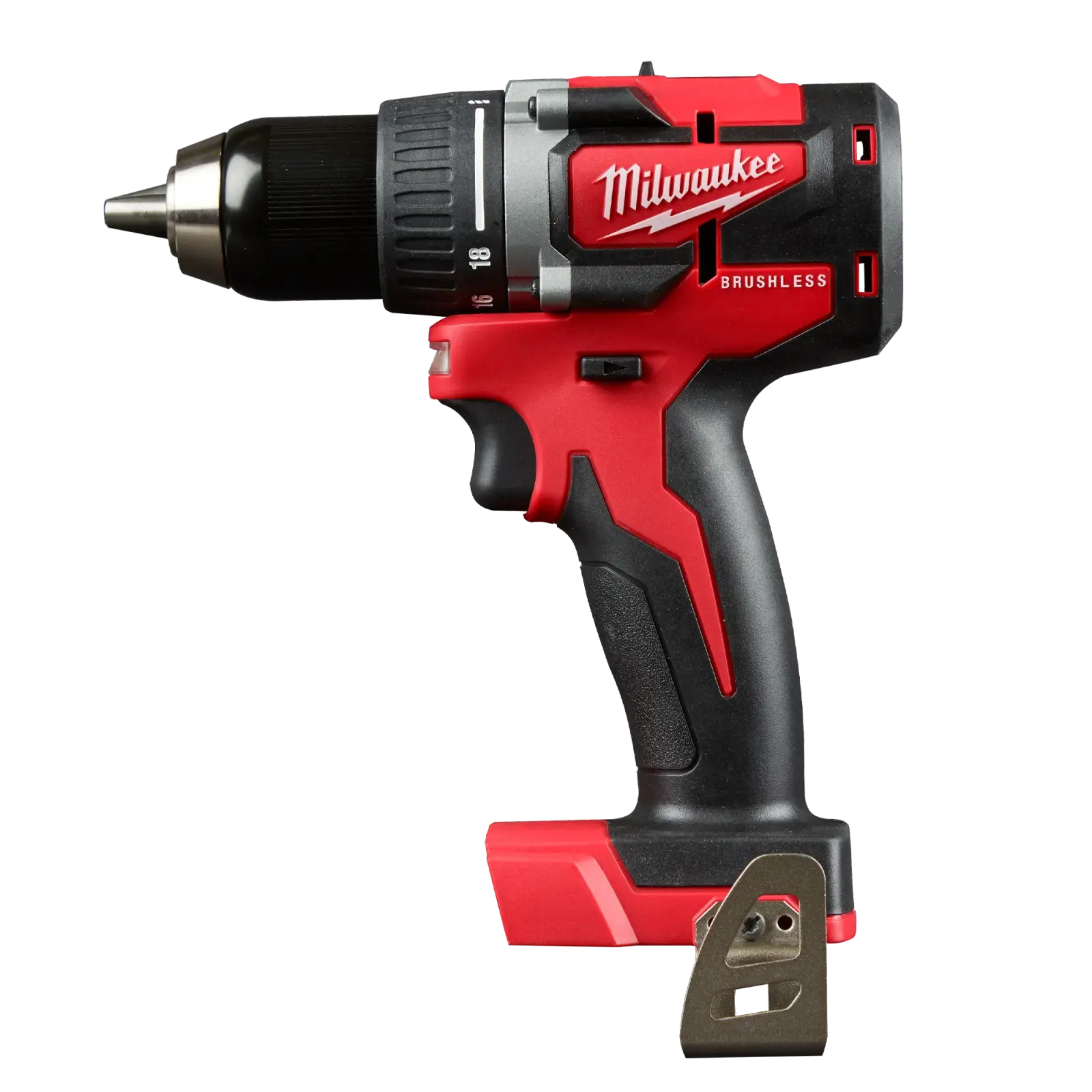
Browse almost any cordless lineup and you will find two versions of what looks like the same drill: one with a brushed motor and a lower price, and one marked brushless. This guide explains what that label means, what it changes in daily use and when it is worth paying for, using spec pages from Milwaukee and DEWALT and explainers published by Bob Vila and ToolGuyd.
How a brushed motor works
In a brushed DC motor, small carbon brushes press against a commutator on the spinning armature. They keep flipping the current so the magnetic fields keep pushing the shaft around. ToolGuyd explains that the rubbing between brushes and commutator costs a little speed and turns some energy into heat, and the brushes wear down with use.
Bob Vila notes that worn brushes show up as a stuttering motor or a tool that stops and starts, and that getting at them to replace them is not always easy. Budget tools are more likely to use brushed motors.
What changes with a brushless motor
A brushless motor drops the brushes and the commutator. Permanent magnets sit on the rotor, and an electronic controller switches current through fixed coils at precise moments to keep it turning. With nothing rubbing, more of the battery’s energy becomes work.
According to Bob Vila, a brushless drill might run anywhere from 30 to 50 percent longer than the same drill with a brushed motor. Brushless motors can also be more compact, run quieter and last longer, since there are no brushes to wear out. The catch, as ToolGuyd puts it, is that they cost more to design and build, and each maker decides how much of the gain goes to extra power and how much to longer runtime.
Matched models, side by side
Milwaukee’s M18 compact drills show that brushless does not always mean more torque on paper:
- M18 1/2” Drill Driver (2606-20), brushed 4-Pole frameless motor: 500 in-lbs of torque, 0-400/0-1,800 RPM and a 7-1/4” length
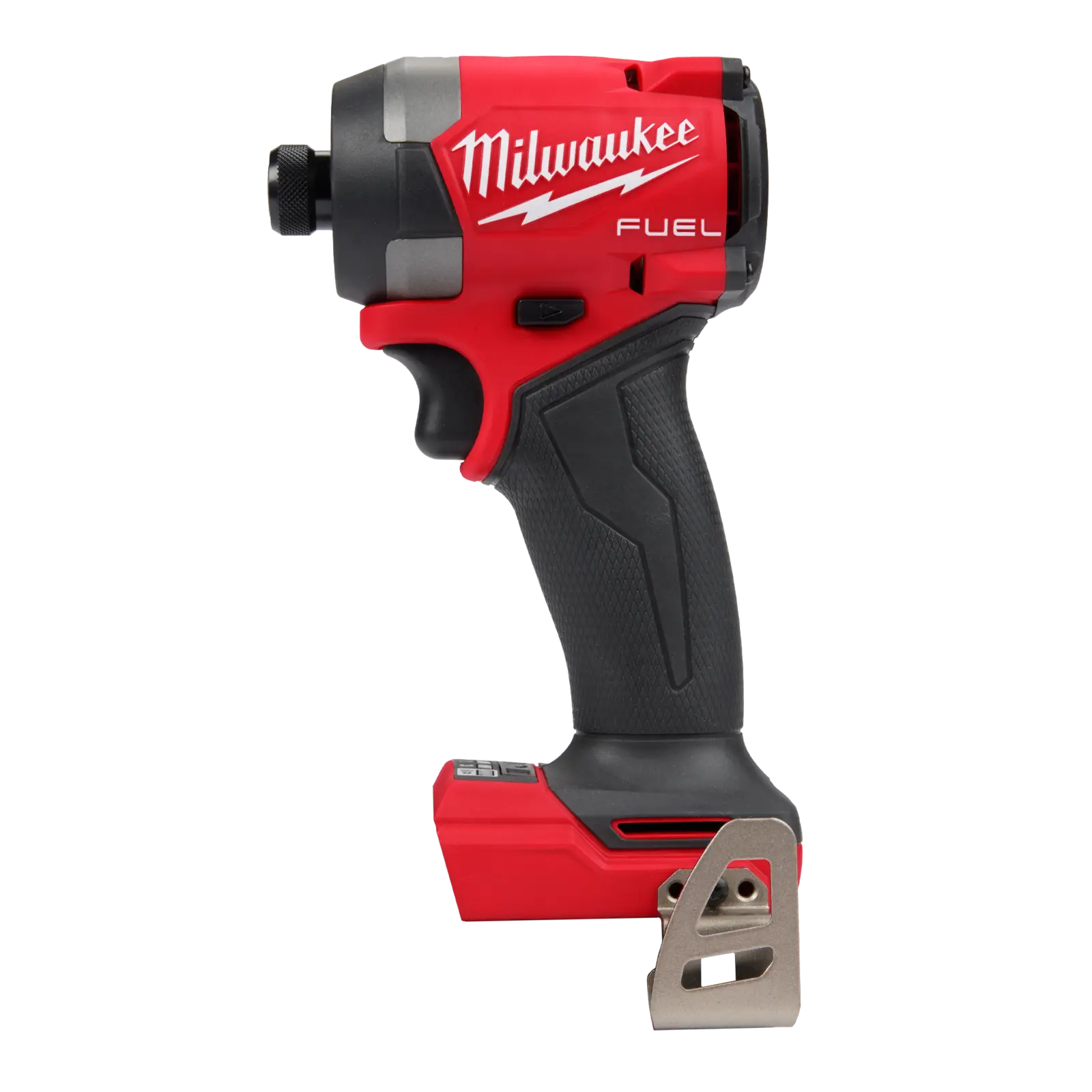
- M18 Compact Brushless 1/2” Drill/Driver (2801-20): 500 in. lbs. of torque, 0-500/0-1,800 RPM, 6-1/2 in. long and 3.4 lb. with the CP2.0 battery
Peak torque and top speed match. What Milwaukee claims for the brushless version is efficiency, more run-time and longer life, in a shorter body.
DEWALT’s pair is a less direct match, since the brushless model also sits in its XR line and DEWALT rates it against a different drill:
- 20V MAX Compact Drill/Driver (DCD771), brushed: 300 unit watts out (UWO) and two speeds of 0-450 and 1,500 rpm
- 20V MAX XR Brushless 1/2-in Drill/Driver (DCD800): two speeds of 0-650 and 0-2,000 rpm, a compact 6.37-in size, and up to 40% more UWO than the DCD791B, according to DEWALT
What it means for you
For light home use, such as hanging shelves and assembling furniture, a brushed drill still does the job and usually costs less. Brushless pays off when you use the tool often or hard: you get more work per charge, less heat, no brushes to service and often a smaller tool.
Brushless models frequently come with other upgrades too, such as better chucks or electronics, so compare the full spec sheet rather than the motor label alone. If you already own batteries for one platform, a brushless bare tool can be an easy way to upgrade without paying for another kit.